
The quiet power of the winter solstice, the illusion of january 1st, and the true new year
In our modern Western culture, January 1st is treated as a loud, celebratory beginning with fireworks, declarations, resolutions, and immediate pressure to change our lives now. Yet energetically, nature tells a very different story. The earth is still, seeds are underground, and light is only just beginning to return. To understand how to work with time rather than against it, we must look deeper, first at the Winter Solstice, then to the cultural role of January 1st, and finally to the astrological New Year at the Spring Equinox, which reflects nature’s true cycle of initiation. When we align our inner rhythm with these cycles, we stop forcing transformation and begin cultivating it.
The Energy of the Winter Solstice: Stillness, Death, and the Return of Light
The Winter Solstice, occurred around December 21st in the Northern Hemisphere, marking the shortest day and longest night of the year. Symbolically and energetically, it represents a sacred pause in our astrological system. The Sun reaches its lowest point in the sky, appearing to “stand still” for several days before beginning its gradual return northward.
Ancient cultures across the world revered this moment. It was not celebrated as a beginning in the way we now celebrate January 1st, but rather as a rebirth within darkness. The Solstice is considered the womb of the year.
Energetically, the Winter Solstice asks us to:
• Turn inward
• Reflect rather than act
• Release rather than initiate
• Rest rather than strive
This is a time associated with death and rebirth, it is the quiet death of old identities, beliefs, and cycles that no longer serve. Just as trees shed their leaves and animals conserve energy, humans are naturally inclined toward introspection, slowness, and contemplation during this period.
Yet modern life rarely allows space for this. Instead, the Solstice is often overshadowed by holidays, consumerism, and social obligations. The true energetic message of reflection and rest is easy to miss.
January 1st: A Cultural Reset, Not an Energetic One
January 1st is a calendar construct, rooted in Roman political and administrative systems rather than natural or celestial cycles. While it serves an important organizational purpose, it is not aligned with seasonal or astrological beginnings.
This is why so many people struggle with New Year’s resolutions. The body, psyche, and natural world are still in winter mode, yet we are told to:
• Start fresh
• Take bold action
• Change habits immediately
• Become a “new version” of ourselves overnight
Energetically, this creates friction. However, this does not mean January 1st is meaningless. It does hold potent symbolic power. Because so many people collectively focus on intention, reflection, and change at this moment, January 1st becomes a collective threshold, a liminal space between what has been and what will be.
Rather than forcing January 1st to function as a true beginning, we can reframe it as a conscious preparation point.
The Astrological New Year: Spring Equinox and the Sign of Aries
Astrologically, the New Year begins at the Spring Equinox, around March 20th or 21st, when the Sun enters 0° Aries. This moment marks:
• Equal day and night
• The return of light overtaking darkness
• The beginning of the zodiac wheel
Aries is the first sign of the zodiac, associated with:
• Initiation
• Courage
• Action
• Birth
• Forward movement
Unlike January 1st, the Spring Equinox aligns perfectly with what is happening in nature. Seeds break through soil, animals emerge from hibernation, and life moves outward again.
Astrologically and energetically, this is when intentions are meant to be activated, not merely imagined. This is why many people feel more motivated, energized, and clear in March and April. The body finally has the solar support it needs to move forward.
January as the Bridge Between Death and Birth
If the Winter Solstice is the womb and the Spring Equinox is the birth, then January is the incubation.
January carries the energy of:
• Clarification
• Sorting
• Gentle restructuring
• Listening to inner truth
• Releasing outdated narratives
Rather than asking, “What do I want to achieve?”, January invites the deeper questions:
• What is no longer aligned?
• What drained me last year?
• What patterns am I ready to leave behind?
• What wants to emerge, even if it’s not fully clear yet?
This is honest, shadow work territory. When January is used consciously, it becomes a powerful ally rather than a month of guilt, burnout, and unmet expectations.
Using January 1st as a Threshold, Not a Finish Line
January 1st can be honored as a portal of intention versus a demand for execution. Think of it as planting seeds in cold soil, not expecting them to sprout immediately, but trusting that they are being nourished, and prepared beneath the surface.
Instead of rigid resolutions, January 1st works best for:
• Setting themes rather than goals
• Naming values rather than outcomes
• Committing to awareness rather than perfection
This approach honors both the collective significance of the date and the natural energetic reality of the season.
Rituals for January: Preparing for the Astrological New Year
Below are rituals designed to align January with introspection, intention, and preparation rather than pressure.
1. The Year-in-Review Release Ritual
Purpose: To consciously release the previous year.
How:
• Write down moments, patterns, habits, or identities you are ready to let go of.
• Thank each one for what it taught you.
• Safely burn the paper or tear it up and bury it in the earth.
This ritual mirrors winter’s natural shedding process.
2. The Theme-Setting Ritual
Purpose: To choose guiding energies rather than strict goals.
How:
• Choose 1–3 words that you want the year to feel like (e.g., “rooted,” “spacious,” “devoted,” “bold”).
• Write them somewhere visible.
• Revisit them monthly, especially as the Spring Equinox approaches.
Themes evolve organically, unlike resolutions.
3. Vision Without Attachment Journaling
Purpose: To listen to what wants to emerge.
Prompts:
• “If I stopped forcing my life, what would naturally unfold?”
• “What am I quietly longing for?”
• “What feels alive, even if it scares me?”
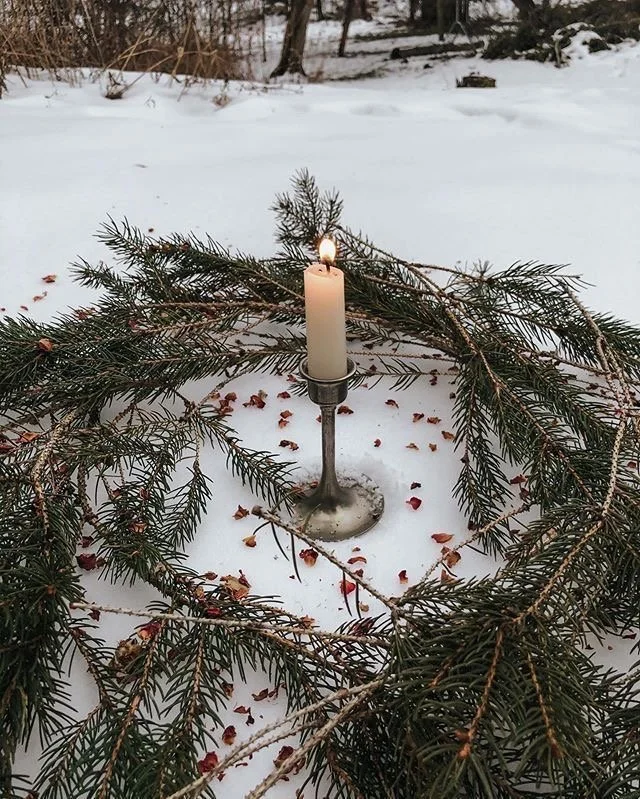
4. Candle of Returning Light Ritual
Purpose: To honor the slow return of solar energy.
How:
• Light a single candle.
• Sit in silence for a few minutes.
• Reflect on what light you are calling back into your life.
This connects January back to the Solstice’s sacred symbolism.
5. Body-Based Intention Ritual
Purpose: To anchor intention somatically.
How:
• Place one hand on your heart, one on your belly.
• Ask: “What does my body need this year?”
• Let the answer come without logic.
Often, the body knows before the mind does.
From January to March: A Conscious Build
Rather than abandoning intentions by February, this approach allows January and February to be months of refinement.
By the time the Spring Equinox arrives, you are not scrambling to reinvent yourself, you are ready to begin taking action. Your intentions are clearer, your energy is aligned, and your foundation is set. And when Aries season ignites forward motion, you move with confidence rather than exhaustion.
Closing: Reclaiming Time as a Sacred Ally
When we stop treating January 1st as a false starting gun and instead honor it as a threshold between endings and beginnings, we reclaim a more humane, intuitive relationship with time. The Winter Solstice reminds us that stillness is sacred and January teaches us that preparation is powerful. The Spring Equinox shows us when to take the leap of faith. By aligning with these rhythms, we stop asking ourselves to bloom in winter and instead allow transformation to unfold in harmony with the cosmos itself.